Best way to learn python programming: A practical, project-focused roadmap
The best way to learn Python is to stop watching tutorials and start building things.
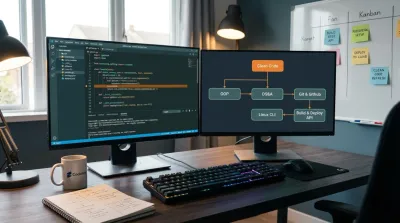
Let's be blunt: the best way to learn Python is to stop watching tutorials and start building things. Seriously. You can't become a great guitarist by just watching concert videos, and you won't become a software engineer by passively watching someone else code. The real learning—the kind that actually sticks—happens when you’re forced to solve a real problem.
This hands-on, project-first approach is what separates people who know Python syntax from those who can actually think like a developer. It forces you to do the real work of engineering: breaking a big, messy problem into small, manageable parts, designing a logical solution, and then turning that plan into clean, working code.
Why Hands-On Projects Are Non-Negotiable #
Learning to code is a skill, not a collection of facts. It’s built through practice, failure, and repetition. You have to get your hands dirty.
When you’re stuck in "tutorial hell," you get a false sense of progress. Following along is easy. But the second that tutorial ends and you’re staring at a blank editor, that confidence vanishes. Building something from scratch, no matter how small, proves to yourself that you can actually apply what you've learned.
The Shift from Following to Building #
There’s a powerful mental shift that happens when you stop being a consumer of tutorials and become a creator of projects. This is where you start building real, durable skills.
- You Build Real Confidence: Spending an hour hunting down a bug teaches you more than a dozen copy-paste exercises ever will. Every problem you solve on your own builds genuine self-belief.
- Abstract Ideas Become Concrete: Concepts like Object-Oriented Programming (OOP) or API design are just fuzzy ideas until you use them to build something. A project makes them real.
- You Learn to Think About Architecture: You’re forced to move beyond single lines of code and think about how the whole system fits together. You start asking why you’re building it a certain way, which is the mark of a pro.
By focusing on projects, you’re not just learning Python; you’re practicing the entire software development lifecycle. If you’re not sure where to start, check out our guide on programming projects for beginners for some solid ideas.
The goal isn't just to write code that works. It's to build a problem-solving mindset that allows you to architect solutions, anticipate challenges, and write software that is robust, scalable, and maintainable. This is the difference between a coder and a true software engineer.
The Brain Science of Doing the Work #
This isn't just a hunch; it's backed by how we learn. Active learning—where you're directly engaged with the material—creates much stronger connections in your brain than passively consuming information. When you write code, hit an error, debug it, and finally see your program run, you get an immediate feedback loop. That’s a powerful learning mechanism a video just can't replicate.
Here’s a breakdown of learning outcomes between traditional passive learning and a hands-on, project-based approach for aspiring software engineers.
Comparing Passive vs Active Python Learning Methods #
| Attribute | Passive Learning (e.g., Video Courses) | Active Learning (e.g., Interactive Platforms) |
|---|---|---|
| Skill Retention | Low. Concepts are quickly forgotten without application. | High. Skills are solidified through problem-solving and repetition. |
| Problem-Solving | Undeveloped. You're following someone else's solution. | Strong. You learn to debug and think independently. |
| Portfolio | None. You have nothing to show employers. | Tangible. You build real projects for your GitHub profile. |
| Confidence | Fragile. Crumbles when faced with a novel problem. | Resilient. Built on a foundation of overcoming challenges. |
| Job Readiness | Poor. Lacks the practical experience employers demand. | Excellent. Directly prepares you for real-world engineering tasks. |
The difference is stark. One path leads to a collection of half-remembered facts, while the other builds a portfolio of demonstrable skills.
This is especially true for a language like Python. Studies have shown that a hands-on approach with Python leads to huge gains in both motivation and confidence. In one study, students who learned Python actively not only felt more capable but also scored significantly higher on their final exams. Practical application isn't just helpful; it's the whole game.
Your Roadmap from Python Novice to Backend Professional #
Look, anyone can learn Python syntax in a weekend. That's the easy part. The real challenge—and what separates a professional backend developer from a hobbyist—is knowing what to learn and in what order. This isn't about memorizing every library function; it's about building the architectural thinking that lets you solve complex problems.
I’ve seen countless beginners get excited and jump straight into building a web app with Django or a fancy AI tool. It almost always ends in frustration. Why? Because they spend their time fighting basic syntax errors or wrestling with concepts they haven't grasped yet, instead of understanding the big picture.
A structured roadmap is your best defense against this. Each skill should build on the last, creating a solid foundation for everything that comes next.
Start with Clean Code Fundamentals #
Your first habit shouldn't be just learning for loops and variables, but learning to write them well. Right from day one, you need to focus on clean, readable, and efficient Python code. This is what people in the industry call writing "Pythonic" code.
Instead of just getting your code to run, start asking the questions a senior developer would:
- Is this easy to read? A teammate—or you, six months from now—should get it immediately.
- Is it efficient? Am I using a list when a dictionary would be faster for this specific task?
- Is it reusable? Can I turn this logic into a function instead of copy-pasting it?
Thinking about code quality from the beginning is what sets the stage for everything else. It makes advanced topics like software architecture feel natural and intuitive when you get to them.
The journey from passively watching tutorials to actively building things is where the real learning happens. You have to shift from just consuming information to applying it.
This flowchart nails it. You move from abstract concepts to concrete skills by getting your hands dirty and actually building things.
Build Architectural Thinking with OOP #
Once you're comfortable with Python's basic syntax and style, it's time for Object-Oriented Programming (OOP). This isn't just some "advanced topic" to learn later; it's the bedrock of modern software engineering. OOP is how you stop writing messy scripts and start building organized, scalable systems.
Learning OOP is where you start thinking like an architect. You learn to model real-world things as objects in your code, which helps you manage complexity and create systems that can grow without collapsing. If you plan to work with professional frameworks like Django, mastering concepts like classes, inheritance, and polymorphism is non-negotiable—those frameworks are built entirely on OOP principles.
Master Data Structures and Algorithms #
With clean code and OOP under your belt, you can now focus on performance. This is where Data Structures & Algorithms (DS&A) come in. These are the tools you'll use to write code that is fast, scalable, and doesn't eat up all your server's memory.
It's not about memorizing complex sorting algorithms for a whiteboard interview. It's about understanding the trade-offs. Knowing when to use a dictionary for fast lookups versus a list for ordered data is a practical, everyday decision for a backend developer.
This knowledge has a direct, real-world impact. The wrong data structure can bring an application to its knees, while the right one can make it fly. For anyone serious about building professional-grade software, this skill is essential.
Integrate the Professional Developer Toolchain #
Writing Python is only one piece of the puzzle. A professional developer works within a whole ecosystem of tools, and you need to master them. The next step is getting comfortable in that environment.
- Linux Command Line: The backend lives on servers, and the vast majority of those servers run Linux. You absolutely must be comfortable navigating the file system, managing processes, and using standard command-line tools.
- Git & GitHub: Version control with
gitis the safety net for every developer. It's how you track changes, fix mistakes, and collaborate. GitHub is where you’ll store your code, work with teams, and showcase your projects.
These are not optional skills; they are fundamental to the daily workflow of a developer. Integrating them into your projects shows employers you know how to operate in a real-world environment. For a deeper look at the role, our guide on how to become a backend developer covers the full scope of what's expected.
Build and Deploy Real-World APIs #
Okay, time to put it all together. The final phase is building and deploying a real-world application. As a backend developer, your focus will be on creating APIs—the engines that power modern web and mobile apps.
A framework like Django Ninja is a fantastic place to start. It gives you the power and reliability of the full Django framework but with a modern, high-performance approach specifically for building APIs.
This final stage is where it all clicks. You'll be:
- Designing a REST API: Planning out your endpoints, request data, and response formats.
- Building the Logic: Writing the Python code that makes your API work.
- Implementing Automated Tests: Writing tests to ensure your API is reliable and bug-free.
- Deploying to the Cloud: Pushing your application to a server so the world can use it.
This sequence—from clean code fundamentals all the way to a deployed application—is the most effective way to learn Python for a lasting career. It’s a deliberate path that builds competence, confidence, and a portfolio that proves you're ready for the job.
Mastering High-Level Principles for a Lasting Career #
Learning Python syntax gets your foot in the door. It’s the absolute first step. But it won't keep you in the room.
To build a real career in software engineering—one that lasts—you have to move beyond just writing code that works. You need to start building software that is well-designed, scalable, and doesn't make your teammates want to pull their hair out.
This is the jump from being a coder to an architect, and it’s where your professional value truly skyrockets. It’s about developing a "design sense"—that gut feeling for not just solving today's problem, but anticipating the problems that will pop up six months or two years from now. It’s about building systems, not just writing scripts.
The Power of Software Architecture #
Think of software architecture as the blueprint for a house. Before anyone pours concrete or hammers a nail, an architect has already decided where the load-bearing walls, plumbing, and electrical systems go. This ensures the house is stable, functional, and won't fall apart if you decide to add a new room later.
It's the same in software. You have to make deliberate choices about how different parts of your application talk to each other. A bad architectural decision made early on can saddle a project with technical debt, making it slow, buggy, and a nightmare to maintain. A project with a solid blueprint is built to last.
The difference between a junior and a senior developer isn't just knowing more syntax. It's the ability to make architectural decisions that prevent future problems. They don't just solve the problem; they design a system where that class of problem can't easily happen again.
This architectural mindset is built on a handful of proven design principles.
Key Principles for Building Robust Software #
These aren't rigid laws you must follow. Think of them as guiding philosophies that help you craft cleaner, more logical systems.
-
DRY (Don't Repeat Yourself): This is probably the most fundamental principle of all. If you catch yourself copying and pasting a chunk of code, stop. That logic needs to be pulled out into its own reusable function or class. Repeated code is a maintenance disaster—when a bug is found, you have to hunt down and fix every single copy.
-
Separation of Concerns (SoC): Your application should be broken down into distinct sections, each handling one specific "concern." For example, your database interaction code should live separately from your API endpoint definitions, which should be separate from your core business logic. This makes the system far easier to debug and test because a change in one area is less likely to break something completely unrelated.
Internalizing these ideas is the first step toward writing code that is not just functional, but also elegant and robust.
The SOLID Principles in Practice #
SOLID is a set of five design principles for Object-Oriented Programming. They sound a bit academic at first, but they are incredibly practical for building flexible and maintainable systems.
| Principle | Core Idea | Real-World Analogy |
|---|---|---|
| Single Responsibility | A class should have only one reason to change. | A Swiss Army knife is useful, but a dedicated screwdriver is better at its one job. |
| Open/Closed | Software entities should be open for extension but closed for modification. | You can add new apps to your phone (extension) without rewriting its operating system (modification). |
| Liskov Substitution | Subtypes must be substitutable for their base types. | If you have a remote control for a "Television," it should also work on a "Smart TV." |
| Interface Segregation | Clients should not be forced to depend on interfaces they do not use. | You don't need a pilot's license (a large interface) just to fly a toy drone (a simple client). |
| Dependency Inversion | High-level modules should not depend on low-level modules. Both should depend on abstractions. | You plug your lamp (high-level) into a wall outlet (abstraction), not directly into the power plant's wiring (low-level). |
Applying these principles leads to code that is less coupled and more cohesive—the true hallmarks of professional-grade software.
The Unspoken Skill of Clean Code and Code Reviews #
Finally, one of the most critical skills that separates the pros from the amateurs is writing clean, readable code and participating in code reviews. Clean code isn't about showing off clever one-liners; it's about clarity. It’s code that another developer can pick up and understand without you having to explain it for an hour.
Code reviews are a cornerstone of how modern software gets built. They aren't about pointing fingers or criticizing people. They are a collaborative process to:
- Catch bugs before they ever reach users.
- Maintain quality and make sure everyone is following team standards.
- Share knowledge and spread expertise across the team.
- Mentor less experienced developers.
Learning to give and receive feedback in a code review is a skill in itself. It's how great teams level up their collective skills and hold each other to a higher standard.
Mastering these high-level principles is the best way to learn Python programming for a career that actually goes somewhere. It shifts your focus from just making things run to engineering solutions that stand the test of time.
Building a Portfolio That Actually Impresses Recruiters #
Let's talk about your GitHub profile. It’s the first thing any recruiter or hiring manager will look at, and right now, it’s probably full of tutorial projects. A to-do list, a simple blog, maybe a weather app.
Here’s the hard truth: a GitHub profile stacked with cloned tutorials tells a recruiter one thing. You’re great at following instructions. It doesn't prove you can solve real problems, think like an engineer, or be trusted to touch their production code.
To stand out, you have to move beyond "learning projects" and start building real "portfolio projects." The difference is huge. A learning project is for you—it's where you mess around with syntax and try out a new library. A portfolio project is for them. It's a signal of job-readiness that proves you can handle a project from a vague idea all the way to a live, deployed application.
Differentiating Learning from Professional Projects #
A truly impressive portfolio project isn’t just about the final code—it's about showing off your entire engineering process. A hiring manager wants to see how you think. Can you take a fuzzy requirement and turn it into a well-architected, functional piece of software?
This is where all the higher-level principles we’ve been talking about come into play. Your project needs to scream "I know how to build software professionally."
It should demonstrate that you can:
- Plan and Architect a Solution: Show you thought about the system design before you started coding. Your
README.mdshould be a masterpiece, explaining the project's purpose, its architecture, and exactly how to get it running. - Write Clean and Tested Code: Your code needs to be readable and follow standard practices like the DRY and SOLID principles. More importantly, it must have a solid suite of automated tests. No tests? It’s just a hobby project.
- Manage Data Professionally: Ditch the SQLite file. Use a real database like PostgreSQL. This shows you can work with the same tools you'll be expected to use on the job.
- Deploy the Application: A live URL is infinitely more powerful than code sitting on your local machine. Deploying your app proves you understand the full development lifecycle.
A portfolio project that is well-documented, tested, and deployed is the single most powerful signal you can send to an employer. It says, "I don't just know Python; I know how to ship professional software." That’s the evidence that gets you interviews.
This hands-on, project-first approach is just a more effective way to learn.
Project Ideas That Signal Backend Expertise #
The best way to learn Python for a backend role is to build projects that look like something a backend developer would actually build. Seriously, no more to-do list apps. Focus on projects that solve a unique problem and force you to handle data, build APIs, and think about system design.
Here are a few ideas to get you started on a real portfolio project:
- A Custom REST API for a Niche Interest: Love hiking, craft beer, or vintage sci-fi? Build an API that serves data about it. This shows you can design your own endpoints, manage a database, and solve a problem you’re actually passionate about.
- A Data Processing Pipeline: Build a service that scrapes data from a public source (like a government website or a forum), cleans it up, and stores it in a structured database. Then, you can expose that clean data through your own API. This screams data handling, automation, and API design.
- A Real-time Notification Service: Create a service that sends users alerts based on specific triggers—like a price drop on a product or a new comment on a specific thread. This forces you to learn about asynchronous tasks, message queues like Celery or Redis, and integrating with external services.
The idea itself doesn't have to be earth-shattering. The magic is in the execution. Pick a small, well-defined problem and build a complete, polished, and professional solution around it. Document your architecture, write good tests, and get it deployed online.
That's the kind of portfolio that doesn't just get noticed—it gets you hired.
Accelerating Your Journey with Interactive Platforms #
Trying to teach yourself Python often feels like you're assembling a car with nothing but the owner's manual. The theory makes sense in isolation—you watch a video, read a blog post, and get the concept. But when it's time to actually build a full, working application, you're stuck.
That gap between knowing the parts and building the car is where most aspiring developers give up. This lonely, inefficient process is exactly what modern interactive learning platforms are built to fix.
The old way of learning is broken. You learn syntax in a tutorial video, then flip over to your own code editor to try and make it work. This constant context-switching is exhausting and leaves you with a fragmented understanding of how professional software development actually happens.
Bridging Theory and Professional Practice #
The best way to learn Python is to work in an environment that mirrors a real-world developer workflow from day one. The top platforms do this by combining two crucial elements:
- Browser-Based Guided Exercises: These are perfect for getting the fundamentals down cold. You tackle small, focused challenges and get instant feedback, building muscle memory for syntax and core concepts without the headache of local setup.
- Synchronized Local Projects: This is where you level up and start thinking like a real engineer. You work in a professional code editor on your own machine, using Git and the Linux command line—just like you would on the job. The platform gives you the project specs, but you build the solution locally.
This hybrid approach gives you the best of both worlds. You get the structured guidance needed to build a rock-solid foundation, plus the hands-on experience of building and managing a project in a professional environment.
An interactive platform isn't just about learning Python; it's about learning the entire workflow of a software engineer. It pushes you from just solving code puzzles to architecting, building, and deploying real applications that solve actual problems.
Fostering Motivation and Demonstrating Skill #
The path to becoming a developer is a marathon, not a sprint. Isolation is your biggest enemy and motivation is your fuel. The best platforms tackle this head-on with features that keep you engaged and moving forward. A clear, structured curriculum takes away the guesswork of what to learn next, laying out a path from basic concepts to advanced software architecture.
This project-based model is incredibly effective. Python’s popularity isn’t an accident; its clean syntax lets you build tangible things faster, which creates the momentum you need to keep going. In fact, Python is projected to be used by 51% of developers worldwide by 2026, partly because it’s so effective for learning and building. For a deeper dive, you can explore the research on its application in education.
Ultimately, the goal is to get a job. A platform that guides you through building a backend software development portfolio gives you a serious advantage. Instead of a GitHub profile filled with half-finished tutorial clones, you’ll have a collection of complete, well-architected projects. This is verifiable proof of your skills—a tangible track record that shows recruiters you’re not just a learner, you’re a builder.
Frequently Asked Questions About Learning Python for a Career #
As you start plotting your path into software engineering, a ton of questions pop up. It's about more than just learning a language; you need a game plan. Let's tackle some of the most common questions aspiring Python developers ask, with a focus on what it actually takes to get job-ready.
How Long Does It Take to Learn Python and Get a Job? #
There's no magic number, but with a focused, project-based approach, most people can become job-ready in 6 to 12 months. But honestly, the clock is less important than how you practice.
Your real progress isn't measured in hours spent watching tutorials. It's measured by the complexity of your portfolio and your ability to build clean, well-architected solutions. That's what separates a hobbyist from a professional.
Should I Learn Django or Flask First? #
This is like asking whether you should learn to drive in a sedan or a hatchback. The real goal is just to learn how to drive. While both are great frameworks, our roadmap points you toward a modern, high-performance option like Django Ninja. It gives you the power of Django with the API-first design of FastAPI.
The key is to master one framework deeply rather than collecting a superficial understanding of several. Pick a modern tool, build something real with it, and learn its architecture inside and out. That’s the depth employers are looking for.
Is Python Enough to Get a Backend Developer Job? #
Let me be direct: absolutely not. Thinking that just knowing Python will land you a backend role is one of the most common and critical mistakes you can make. It's like a chef thinking all they need to know is how to use a knife.
As we lay out in the roadmap, a professional backend developer also needs to be fluent in:
- Version Control: Real mastery of Git and a professional GitHub presence.
- The Development Environment: Comfort and skill in the Linux command line.
- Database Management: Knowing how to work with databases like PostgreSQL.
- API Design: A solid grasp of REST principles and how to structure APIs properly.
- Testing Methodologies: The ability to write automated tests that guarantee your code works.
A portfolio that shows you can integrate all these skills is what makes you a candidate worth hiring.
Do I Need a Computer Science Degree to Become a Software Engineer? #
No, a four-year degree is not a hard requirement anymore. More and more, employers are shifting their focus from formal education to demonstrable skills and a rock-solid project portfolio.
A structured, self-guided path that forces you to learn software architecture, clean code, and real-world problem-solving can prepare you far more effectively than many academic programs. Your ability to build and deploy a well-architected application is the ultimate proof of your competence.
Ready to stop following tutorials and start building a professional portfolio? Codeling provides a structured, hands-on curriculum that takes you from Python fundamentals to deployed, job-ready backend applications. Start building with Codeling today.