Are Software Developers Still Needed in the Age of AI?
AI is an incredibly powerful tool, but a tool still needs a skilled artisan to wield it.
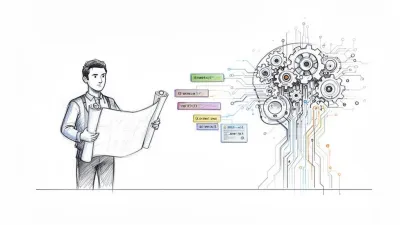
Yes, software developers are absolutely still needed in the age of AI. In fact, you could argue we need good ones more than ever. The role isn't going away—it's just evolving. The grunt work is getting automated, pushing developers up the value chain from just writing code to architecting systems, solving complex problems, and thinking strategically.
AI is an incredibly powerful tool, but a tool still needs a skilled artisan to wield it.
The AI Paradox: Why More Automation Means More Demand for Experts #
The headlines love a good doom-and-gloom story. They suggest AI coding assistants will make human programmers obsolete any day now. But this ignores a funny thing that happens with automation, something we can call the AI Paradox. The more AI automates simple, repetitive coding, the more we need expert developers to handle the really hard stuff: designing, managing, and scaling the complex systems AI can't build on its own.
Think of it this way: a nail gun makes a carpenter way faster, but it can't design the house. It can't read the blueprint, solve an unexpected framing problem, or make sure the foundation is solid. That’s the job of the expert.
AI is the same. It can spit out a function or a boilerplate file in seconds, but it doesn’t have the judgment, context, or deep understanding to build a robust, secure, and maintainable software system from the ground up.
The Evolving Role From Coder to Architect #
This paradox is changing what it means to be a developer. The job is shifting away from just typing out every single line of code. The real value is moving up a level. The modern developer is less of a code monkey and more of a software architect and strategic problem-solver.
The table below breaks down this shift from the traditional focus to the modern, AI-augmented reality.
| Task Area | Traditional Developer Focus | Modern AI-Augmented Developer Focus |
|---|---|---|
| Code Creation | Manually writing most functions, classes, and boilerplate. | Prompting AI for boilerplate, then reviewing, debugging, and integrating the output. |
| Design & Architecture | Implementing features based on a pre-defined architecture. | Designing the entire system architecture, making high-level trade-offs. |
| Problem Solving | Debugging specific code-level implementation errors. | Diagnosing system-wide issues, integrating disparate services, and ensuring scalability. |
| Business Logic | Translating a detailed spec into code. | Understanding core business needs and translating them into a technical strategy. |
As you can see, the focus is less on the "how" of writing a single function and more on the "why" of building the entire system. Instead of just implementing features, your value now comes from things like designing resilient architecture, translating fuzzy business needs into concrete technical plans, and making sure all the pieces—AI-generated or not—fit together perfectly.
As one expert put it, there's a real danger with letting AI do all the work, especially for those still learning the ropes.
The most concerning thing with AI code generation is that less experienced developers often can’t tell the difference between code that works and code that lasts. AI tends to write brittle code that does not consider edge cases or maintainability.
The Labor Market Data Agrees #
This isn't just a gut feeling; the numbers back it up. The data flatly contradicts the media hype.
Despite the explosion of tools like ChatGPT and GitHub Copilot, the U.S. Bureau of Labor Statistics projects that jobs for software developers will grow by a massive 17% between 2023 and 2033. For context, that’s way faster than the 3% average for all other jobs. This translates to an estimated 327,900 new developer jobs.
What's fueling this demand? It's the very technologies that power the modern world: cloud computing, cybersecurity, mobile apps, and, you guessed it, AI itself. For every new AI model that gets created, you need a team of human developers to build the infrastructure, manage the data pipelines, and integrate the model into an actual product.
Even the intuitive, feeling-based approach some developers use with AI, which we've talked about in our article on "vibe coding", still requires a rock-solid engineering foundation to be successful.
Ultimately, AI isn't a replacement. It's a force multiplier. It gets rid of the boring stuff and elevates your role, creating even more opportunities for those who can master the timeless principles of great software architecture and design.
What Job Market Data Reveals About Developer Careers in 2026 #

Even with strong long-term growth projected for developers, it’s fair to ask: what does the market look like right now? The headlines love to paint a grim picture of AI causing mass layoffs today, but a quick look at the actual data tells a completely different story.
When you check the job boards, you see a huge number of openings for traditional software developers—far more than for specialized AI roles. This isn't a guess; it shows exactly where companies are putting their money in 2026. The demand for rock-solid engineering skills is as strong as ever.
Just look at recent U.S. labor stats. In February 2026, LinkedIn listed 72,781 openings for "Software Engineer" and another 53,654 for "Software Developer." Those numbers dwarf the openings for niche roles like "AI Engineer," proving the core need for developers isn't just surviving, it's thriving. You can dig into a more detailed breakdown in the latest tech job market report.
The Real Need Behind the AI Hype #
So if AI is so powerful, why are companies still hiring so many regular developers? The answer is simple: an AI model on its own can't do anything. It’s like a brilliant brain in a jar—tons of potential, but no way to interact with the world.
To turn that brain into a real product, businesses need a small army of engineers to build its "body." This means:
- Building the Infrastructure: Developers have to create the robust backend systems, servers, and cloud environments where the AI model actually runs.
- Managing Data Pipelines: Someone has to design and maintain the complex systems that feed the AI clean, reliable data for both training and day-to-day operations.
- Integrating the AI: Engineers are the ones who build the APIs, user interfaces, and application logic that connect the AI to the end user, making it feel like part of a seamless product.
For every single AI model that gets deployed, dozens of traditional software engineering jobs are created. This fact directly contradicts the myth that AI is a one-for-one replacement for developers.
AI doesn't reduce the need for developers; it creates a massive new workload that only developers can handle. It's an engine that needs a team of expert mechanics to build the car around it, keep it fueled, and connect it to the steering wheel.
Architecture Is the New Bottleneck #
This shift puts a huge premium on developers who can think like an architect. When AI can churn out code snippets in seconds, writing individual lines of code is no longer the hard part. The real challenge is designing the system that all this code needs to fit into.
A company can have the world's most advanced AI model, but if the software holding it all together is brittle, slow, or insecure, the entire product is a failure. This is why businesses are desperate for developers who get high-level principles like:
- Scalable System Design: How do you build a system that can serve millions of users without falling over?
- Clean Architecture: How do you structure an application so it's easy to maintain, test, and update years down the line?
- API Design: How do you create reliable and secure contracts that let different parts of a system—including AI services—talk to each other effectively?
These are not skills an AI can replicate. They require human judgment, experience, and a deep understanding of trade-offs. This reality gives you a clear and stable career path: focus on the timeless principles of solid engineering, and you will always be in demand.
How to Stay Relevant: Architecture Over Syntax #
If AI can spit out code in seconds, what's left for a human developer to do? It's a fair question, and the answer has nothing to do with typing faster. While AI is great at generating isolated functions or boilerplate, it completely falls apart when it comes to the high-level thinking that turns a pile of code into a valuable, reliable product.
This is where you need to stop thinking like a "coder" and start thinking like an "architect."
Imagine building a skyscraper. You could have a team of robots that lay bricks with perfect precision and speed. That's the AI. But without a master architect, all you've got is a very neat pile of bricks. You need a human to draw the blueprint, to understand the physics of the site, to plan the plumbing and electrical, and to make sure the whole thing won't fall over in a strong wind.
That's the job of a senior engineer. The hard problems in software aren't about syntax anymore. They're about structure, strategy, and turning a vague "we need a new feature" from a stakeholder into a robust, technical plan. An AI can't sit in a meeting, read between the lines of a feature request, or design a system that can pivot when the business does.
Moving Beyond Code to Architecture #
The real value you bring to the table in the age of AI is the ability to think about the entire system. How do all the pieces—the database, the API, the frontend, the background workers—fit together? It’s about making critical trade-offs that an AI, with no real-world context, simply can't grasp.
This is why foundational software design principles are no longer just nice-to-haves. They're your job security. These aren't just academic concepts; they're the battle-tested frameworks for building software that doesn't crumble under its own weight.
Key architectural principles you need to own include:
- Clean Architecture: This is all about separating your code into independent layers. Think of it like a building with fire doors—a fire in the kitchen (a database change) shouldn't burn down the whole house (the UI). It ensures you can swap out a database or update a framework without rewriting everything.
- SOLID Principles: This is a set of five design rules that force you to create systems that are easier to maintain and understand. The Single Responsibility Principle, for example, just means a class or module should do one thing and do it well. This makes debugging a thousand times easier.
An AI might write code that works right now. A skilled developer following these principles writes code that lasts for years, saving a company a fortune in maintenance costs down the line.
The Power of Human Judgment and Creativity #
Ultimately, the skills that matter most are the ones that can't be scraped from a dataset. AI works by recognizing patterns in existing data; it literally cannot invent a solution to a problem it's never seen before. That’s where you come in.
AI is like a brilliant intern—fantastic for getting a first draft done, but you wouldn't trust it with mission-critical logic or the subtle nuances of a specific business problem.
This is why creative problem-solving is now a premium skill. When a system fails in a way no one expected, or when a customer has a unique need that doesn't fit any existing pattern, an AI is lost. It takes a human developer's experience, intuition, and creativity to dig in, find the root cause, and invent a solution.
Likewise, strategic thinking is what separates the senior from the junior. A truly valuable developer is constantly asking the bigger questions:
- Should we build this feature fast to get it to market, or build it right so it can scale?
- What are the long-term security risks of this design choice?
- How does this decision affect our ability to add other features two years from now?
These aren't just technical questions; they're business and product questions. They require a deep understanding of context, risk, and long-term vision—things an AI has no concept of.
So, are software developers still needed? Absolutely. But the demand is shifting away from people who can just write code, and toward people who can think.
Your Upskilling Roadmap to Become an AI-Proof Developer #
If you want to stay relevant, you can't just chase the latest hot framework or memorize syntax. You have to go deeper. The real key is building a fundamental, principle-based understanding of how great software gets built.
This roadmap isn't about learning AI tricks. It's about developing the architectural and design thinking that companies are desperate for. It’s what turns you from someone who just writes code into a genuine system builder—the kind of developer who directs AI, not the other way around.
It all starts not with AI, but with the timeless fundamentals of backend engineering. Mastering this stuff is what separates developers who can only use AI from those who can guide it. It’s about learning the "why" behind the code, not just the "how."
Stage 1: Master the Backend Fundamentals #
Before you can build anything complex, you need a rock-solid foundation. This is all about getting a deep, mechanical understanding of how software actually works on the server side. You'll focus on principles that hold true no matter what language or framework you're using.
Think of it like learning how a car engine works before you try to build a race car.
- Object-Oriented Programming (OOP): Get the core principles—encapsulation, inheritance, polymorphism—down cold. OOP teaches you how to organize code into logical, reusable blueprints. It's absolutely essential for building any kind of large-scale application.
- Essential Tooling: Get comfortable on the command line and become an expert with Git version control. These are the non-negotiable tools of the trade. They’re the workbench and safety gear for every single professional developer.
This stuff is so important. A developer who gets OOP can tell an AI, "Generate a class for a user profile with methods for updating an email and password," and then actually critique the AI's output for good design. A novice is just stuck with whatever the AI spits out.
Stage 2: Build and Deploy Real-World APIs #
Once you've got the fundamentals, it's time to put them to work by building the connective tissue of all modern software: REST APIs. This is where you graduate from theory to practice, creating services that other applications can talk to.
This skill is more critical than ever, since even AI models are typically wrapped in and accessed through APIs.
Building a well-designed REST API is one of the clearest demonstrations of your ability to think like an architect. It proves you can design a stable, logical contract between different parts of a system—a task that requires careful planning and foresight that AI just can't provide on its own.
A huge part of this is getting good at database design. You have to learn how to structure data logically, create relationships between tables, and write queries that don't fall over under pressure. A poorly designed database will bring even the best-written application to its knees.
If you’re ready for a deep dive here, our complete guide on how to become a backend developer lays out a structured path for mastering these exact skills.
This is the ideal flow: human vision guides AI execution, and together they create a robust, well-designed system.
The developer’s job is shifting away from just manual code production and toward high-level strategic direction and system validation.
Stage 3: Integrate AI as a Productivity Multiplier #
Only after you’ve mastered building and deploying systems on your own should you start weaving AI tools into your workflow. Once that foundation is solid, you can use AI not as a crutch, but as a powerful assistant to make you faster and more effective.
Your goal here is to use AI for specific tasks:
- Boilerplate Generation: Let the AI handle the repetitive stuff. Think setup code, basic tests, or simple utility functions.
- Code Review and Analysis: Ask an AI to review your code for potential bugs, suggest refactorings, or point out edge cases you might have missed.
- Prototyping and Exploration: Use AI to quickly mock up a new feature or explore different architectural approaches before you commit to one.
When you follow this path, the answer to the question "are software developers still needed?" becomes a clear and resounding "yes." But the job has changed. The most valuable developers will be the ones who combine deep engineering principles with the wisdom to use AI as a tool, not a replacement.
Why Top Companies Still Pay a Premium for Human Developers #
It’s easy to get fixated on the initial act of writing code. AI can spit out a function for pennies, so why are experienced developers still commanding six-figure salaries? Because top companies know a secret that’s easy to miss: the first line of code is the cheapest part of any software project.
The real cost—the Total Cost of Ownership (TCO)—shows up months and years later. It's in the late-night calls to debug a production outage, the scramble to scale a system that’s buckling under its own success, and the painstaking work of maintaining code that’s become a tangled mess. This is where human expertise isn't just nice to have; it's essential.
Companies aren't just paying for someone who can code. They're investing in a strategic partner who can protect the business from disaster and build systems that last. The more code AI generates, the more valuable the person who can properly design, validate, and manage it becomes.
This is the real answer to "are software developers still needed?" AI is nowhere close to filling that role.
The Million-Dollar Flaw in AI-Generated Architecture #
Imagine you ask an AI to spin up the architecture for a new e-commerce site. It delivers a clean, functional database schema and API. Everything works. The initial tests all pass, and the project seems to be moving at lightning speed.
But buried deep in that architecture is a subtle flaw. The system was never designed to handle the crushing traffic of a Black Friday sale. When the big day arrives, the site grinds to a halt, the database locks up, and the entire system collapses. Hours of downtime turn into millions in lost revenue. This isn't just a scary story; it's the kind of scenario that keeps CTOs up at night.
A skilled human developer is an insurance policy against this kind of disaster. Their ability to foresee future bottlenecks, design resilient systems, and question the long-term implications of a technical choice is an incredibly high-ROI investment for any business.
This is where an experienced engineer's mindset makes all the difference. They think about things an AI simply doesn't, like designing for scalability and fault tolerance. What happens if a server fails? How do we stop one bad request from cascading and taking down the whole service? They build in redundancies and fail-safes, turning a potential catastrophe into a minor blip.
Protecting Long-Term Business Value #
Developers are more than just builders; they're guardians of the business. A single, overlooked security flaw in an AI-generated snippet could expose sensitive customer data, leading to devastating reputational damage and legal nightmares. A human developer, thinking like an attacker, is the last line of defense.
They don't just review code for functionality; they hunt for potential attack vectors, ensuring the software is truly robust. This level of adversarial thinking and contextual awareness is something AI just can't replicate.
The market data backs this up. Despite the hype, skilled developers still enjoy high salaries and strong job security. For example, 36.4% of developers earn between $50,001–$200,000 annually, with a notable 7.9% earning over $200,000. And even with recent industry layoffs, only 11% of developers are actually worried about losing their jobs, a sign of the confidence that real talent commands. You can explore more about these promising software developer career statistics.
While AI can certainly lower the upfront cost of writing a function, the long-term value a great developer delivers—in reliability, scalability, and security—is priceless. They are strategic assets who earn premium salaries because they deliver premium results. If you’re looking to become that kind of developer, a great place to start is our guide on how to get a software engineering job.
Common Questions About a Developer Career in the AI Era #
Even with all the chatter and hype, a few specific questions keep popping up about building a career in software. Let's tackle some of the most common ones and clear the air. The short answer is yes, developers are still very much in demand, but the skills you need to succeed are definitely changing.
Will AI Eliminate Entry-Level Developer Jobs? #
No, but it’s definitely raising the bar. AI is great at automating the simple, repetitive coding tasks that used to be a staple of junior-level work. This means companies aren't just looking for someone who can write a basic function anymore; they need new developers who can think about system design, testing, and real problem-solving from day one.
An entry-level developer who can think like an engineer—validating AI-generated code and spotting architectural flaws—is infinitely more valuable than one who just knows syntax. This shift is actually a huge opportunity for aspiring developers who take the time to build a solid engineering foundation.
Should I Learn to Code or Just Learn to Prompt AI? #
You should absolutely learn to code. Period. Trying to prompt an AI to build a complex system without understanding code is like trying to direct a movie without knowing anything about cameras, lighting, or storytelling. Your instructions will be vague, and the result will be a mess.
To prompt an AI effectively, you need a deep understanding of what you’re asking it to do. Without knowing programming fundamentals, architecture, and how databases work, you won't be able to guide the AI, spot its mistakes, or integrate the code it produces into a larger system.
Mastering code is what makes you a master prompter. It gives you the expertise to guide, validate, and debug what the AI produces. You go from being a passive user to an active director.
Which Programming Language Is the Most Future-Proof? #
There's no such thing as a "future-proof" language, but the ones with strong, active ecosystems for backend development, data science, and AI are your safest bet. Python is a top contender here, thanks to its total dominance in AI/ML libraries like TensorFlow and PyTorch, plus its powerful web frameworks like Django.
But honestly, the specific language isn't the most important thing. The real key is your ability to apply core architectural principles and design patterns. The skill of building complex, scalable, and maintainable systems is what truly makes you valuable—and that's a skill that translates to any language.
How Can I Demonstrate High-Level Skills Without Professional Experience? #
Your portfolio is where you prove you're more than just a beginner. It's time to move past the simple to-do lists and weather apps. Build projects that solve genuinely complex problems and show off your architectural thinking.
- Build a scalable REST API that uses a clean architecture, separating your business logic from the web framework.
- Develop a service that integrates with a third-party LLM API (like OpenAI's), proving you can work directly with modern AI tools.
- Create a complete system with a well-designed database schema, robust error handling, and clear documentation.
Projects like these send a clear signal to employers: you can think like an architect, not just a coder. That's what makes you a standout candidate in today's market.
Ready to build the architectural skills that employers demand in the age of AI? Codeling provides a structured, hands-on curriculum focused on Python, REST APIs, and system design. Build portfolio-ready projects and master the fundamentals at https://codeling.dev.